Claude Code's Hidden Multi-Agent System Is Real

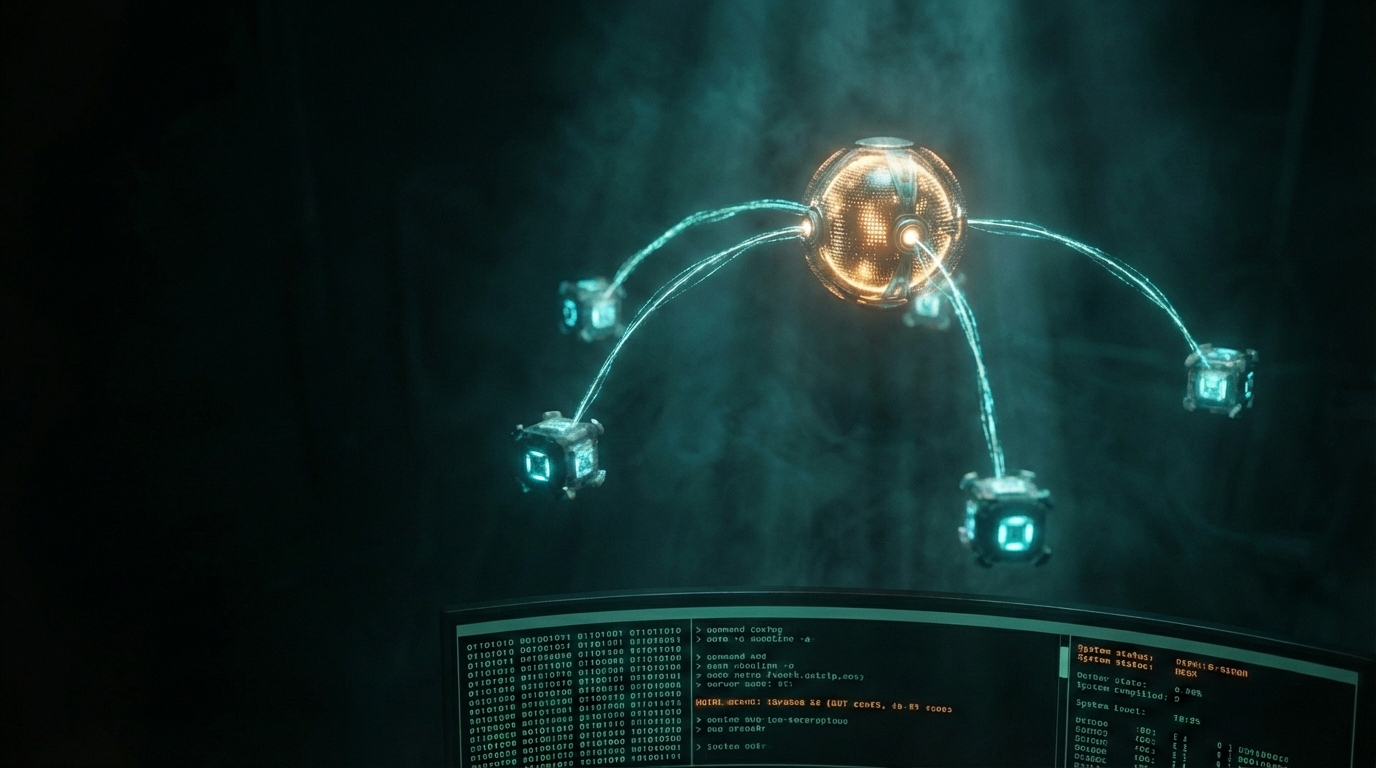
Spining up agent swarms are everywhere right now. Wilson Lin showed us with FastRender that an agent swarm could even build a web browser from scratch! The whole ecosystem is converging on multi-agent architectures for complex tasks. So when I saw a tweet claiming Claude Code already has a hidden multi-agent system baked in, my first thought wasn't "no way" - it was "already?"
Turns out: yes. Already.
The Claim
Kieran Klaassen posted on January 23rd:
I think I found a hidden Claude Code feature! TLDR: It's a built‑in multi‑agent team system in Claude Code. TeammateTool lets you create teams, let agents join, message each other, approve plans, and shut down the team — but it's feature‑flagged and not enabled for most users yet.
He included a gist documenting what he found by running strings on the Claude Code binary. Bold claim. Let's verify it.
The Verification
I couldn't just trust the tweet, sorry Kieran, so i had to verify!
Claude Code stores its binaries in ~/.local/share/claude/versions/. I'm running v2.1.19:
$ strings ~/.local/share/claude/versions/2.1.19 | grep -E "CLAUDE_CODE_(TEAM|AGENT)" | sort -u
CLAUDE_CODE_AGENT_ID
CLAUDE_CODE_AGENT_NAME
CLAUDE_CODE_AGENT_SWARMS
CLAUDE_CODE_AGENT_TYPE
CLAUDE_CODE_TEAMMATE_COMMAND
CLAUDE_CODE_TEAM_NAME
CLAUDE_CODE_PLAN_MODE_REQUIRED
CLAUDE_CODE_SUBAGENT_MODEL
That's not accidental naming. Let's dig deeper.
What I Found
The Prompts
Buried in the binary are complete system prompts for team members:
Teammate Prompt: (strings $BINARY | grep -A 10 "You are a teammate in team")
You are a teammate in team "${teamName}".
**Your Identity:** Name: ${agentName}
**Team Resources:**
- Team config: ${teamConfigPath}
- Task list: ${taskListPath}
**Team Leader:** The team lead's name is "team-lead".
Send updates and completion notifications to them.
Delegate Mode Prompt: (strings $BINARY | grep -A 10 "You are in delegate mode")
You are in delegate mode for team "${teamName}".
In this mode, you can ONLY use the following tools:
- TeammateTool: For spawning teammates, sending messages, and team coordination
- TaskCreate, TaskGet, TaskUpdate, TaskList

You CANNOT use any other tools (Bash, Read, Write, Edit, etc.)
until you exit delegate mode.
Shutdown Protocol: (strings $BINARY | grep -A 10 "You are running in non-interactive")
You are running in non-interactive mode and cannot return
a response to the user until your team is shut down.

You MUST shut down your team before preparing your final response:
1. Use requestShutdown to ask each team member to shut down gracefully
2. Wait for shutdown approvals
3. Use the cleanup operation to clean up the team
The Operations
The TeammateTool supports these operations:
spawnTeam- Create a new team with task listdiscoverTeams- Find existing teamsrequestJoin,approveJoin,rejectJoin- Membership managementwrite- Direct message to teammatebroadcast- Message all teammatesrequestShutdown,approveShutdown,rejectShutdown- Graceful terminationapprovePlan,rejectPlan- Plan approval workflowcleanup- Team cleanup
The Tier Gating
Found this in the binary:
if (H === 'max' && $ === 'default_claude_max_20x') return 3;
if (H === 'enterprise' || H === 'team') return 3;
return 1;
Translation: Max and Enterprise tiers get 3 agents. Everyone else gets 1 (effectively disabled).
The Architecture
Based on the code, here's how the system is structured:
Team Structure
flowchart LR
    subgraph Orchestrator
        Lead[team-lead]
    end

    subgraph Workers
        W1[teammate-1]
        W2[teammate-2]
        W3[teammate-3]
    end

    subgraph Storage["~/.claude/teams/"]
        Tasks[(task-list.json)]
    end

    Lead -->|spawns| W1
    Lead -->|spawns| W2
    Lead -->|spawns| W3

    W1 & W2 & W3 -->|claim| Tasks
    W1 & W2 & W3 -.->|done| Lead
Delegate Mode Flow
flowchart TB
    Start([Start]) --> Normal

    subgraph Normal[Normal Mode]
        All[All tools available]
    end

    Normal -->|enter delegate| Delegate

    subgraph Delegate[Delegate Mode]
        direction LR
        Spawn[spawnTeam]
        Msg[write/broadcast]
        Task[TaskCreate/Update]
    end

    Delegate -->|exit delegate| Normal
    Delegate -->|restricted| Note[No Bash, Read,<br/>Write, Edit]
Shutdown Protocol
sequenceDiagram
    participant L as team-lead
    participant W as teammates
    participant U as User

    Note over L,U: User blocked until shutdown complete

    L->>W: requestShutdown
    W-->>L: approveShutdown
    L->>L: cleanup()
    L->>U: Final response
Verify It Yourself
Want to confirm this on your own machine? Here's how:
Find Your Binary
# Check your version
claude --version

# Find where binaries live
ls ~/.local/share/claude/versions/
Search for Team Functions
# Find environment variables
strings ~/.local/share/claude/versions/2.1.19 | grep -E "CLAUDE_CODE_(TEAM|AGENT)" | sort -u

# Find teammate prompts
strings ~/.local/share/claude/versions/2.1.19 | grep "You are a teammate"

# Find TeammateTool operations
strings ~/.local/share/claude/versions/2.1.19 | grep -E "spawnTeam|requestShutdown|broadcast"
Check for Tier Gating
# Look for the agent count logic
strings ~/.local/share/claude/versions/2.1.19 | grep -E "max.*enterprise|AGENT_COUNT"
Replace 2.1.19 with your version number.
What This Means
It's Real and Complete
This isn't stub code or a prototype. The prompts are polished. The shutdown protocol is thoughtful - teammates can't just vanish, they have to gracefully terminate. There's a delegate mode that restricts the leader to coordination-only tools. This already looks pretty polished.
The Design Reveals Intent
The architecture tells us what Anthropic thinks multi-agent workflow looks like and its very close to the Wilson Lin examples. (https://github.com/wilsonzlin/fastrender)
- Shared task list - Teammates don't get private instructions. They pull from a common queue. This prevents the "telephone game" problem where agents pass increasingly garbled context to each other. Anthropic just shipped this with Tasks the day before Kieran's discovery: "Tasks are stored in the file system so that multiple subagents or sessions can collaborate on them. When one session updates a Task, that is broadcasted to all sessions currently working on the same Task List."
- Explicit coordination mode - The team lead can't directly edit files while coordinating. They have to delegate. This enforces clean separation between orchestration and execution.
- Idle notifications - Workers automatically ping the leader when they finish. The leader doesn't have to poll.
Where This Is Going
With Tasks already shipping and TeammateTool waiting in the wings, the pieces are falling into place. The architecture is thoughtful - shared task queues, explicit coordination modes, idle notifications. Its elegant in its simpliestiy, matching observations from others like Cursor https://cursor.com/blog/scaling-agents The future of AI coding isn't one agent doing everything sequentially. It's specialized agents collaborating on shared work, each doing what they're best at. And that future is closer than most people realize.
What are you shipping in 2026? Why not today?
Goodhart's Law Ate My Context Window
I optimized my AI coding loop for the wrong thing. It looked fast. It wasn't effective.
Free Printable Math Sheets for Kids — Number Chart, Skip Counting, Multiplication, and More
Free printable PDF worksheets for kids — a 1-120 number chart, skip counting, multiplication table, number bonds, and a US coin reference sheet. Download, print, and learn.